Collaborating in the process of bringing a play to life on the stage always involves a journey of self-discovery.
During my involvement in Applause Community Theater’s recent production, “4 One-Act Plays by 3 Local Playwrights + One Guy From Montana,” I made this surprising, in fact I’ll go far as to say shocking, discovery: our blender doesn’t have a bottom.
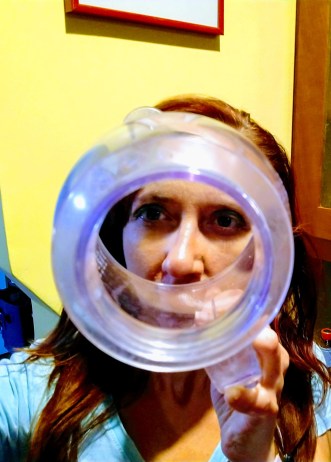
Neither Chad or I have any idea what happened to the bottom of our blender and we’re still mystified about where it went. It seems highly unlikey that a thief would have broken into our home and only stolen the bottom of our blender. Although perhaps it is possible that said thief actually stole other very targeted objects that we just haven’t noticed are missing yet. Afterall, if the missing blender bottom escaped our attention, what other domestic appliance absences have we been oblivous to? Chad only noticed that the blender bottom was missing when I relocated it from our kitchen counter to the theater so it could be used as a prop. I suspect the blender bottom has been missing for years.
Clearly, we don’t use our blender very often. This isn’t surprising because I am morally opposed to drinking my calories unless they contain alcohol. And yes, I realize that there are many blended alcoholic drinks, but those are all sweet and high caloric drinks. I also realize you can make actual food in a blender (soups and whatnot) but I’m still dubious about how many calories are going to sneak up on me if there is no chewing involved.
And let’s face it, in my current manifestation of Amy-ness, I am just not choosing to make the time or take the effort to use a blender. I’m not ruling out that this could change. I could shift my priorities, learn something new, let go of some old fears and neuroses.


I really didn’t intend this post to be all about blenders (sometimes you just have to follow your artistic muse where it leads you). I still want to at least touch on another life-changing lesson I learned from the one-acts: It’s really fun playing a horrible person. Or more specifically, it’s extremely fun to play a horrible person who gets to wear a sexy red dress and act brazen and bold and flirt and fight on-stage with her husband who is playing an equally horrible person.
My character, Stacy, was such a terrible person that I got one of the best compliments about my acting ever:
“I didn’t like one single thing about you, except for how you looked in that red dress.”
I also learned that no matter how awful a character seems, you need to look below the surface and try to see things from their point of view. You have to try and understand and empathize with a character to convincingly play them as real and believable (even over-the-top characters). I’m sure this has merit in the real world, too…only through empathy can we have real interactions with other people.
And we can usually find some points of agreement, right? I didn’t spend too much time developing Stacy’s backstory, but I bet she would totally be with me on the blender issue.
 Amy Lu's View
Leave a comment