We’ve lived in our northeast Minneapolis house for 24 years, and I just learned a few weeks ago that the Columbia Golf Course, which is half a mile away from us, used to be a lake.
I learned about the vanished lake from friends who also live in NE when they were giving us a ride home from the airport. Although I’m usually not into history or geography, I was pretty intrigued by this revelation.
By the time we got home and unpacked our bags, I forgot all about the mysterious departed lake. But yesterday, I unintentionally discovered the lake was named Sandy Lake and learned a little about its history.
Yesterday afternoon, I decided to take a walk to the Saint Anthony Parkway bridge (also very historical–https://www2.minneapolismn.gov/government/projects/public-works/completed-projects/complete-cip/st-anthony-bridge/), which is about a mile from our house. A major construction project on the bridge was completed in 2017, and though I’ve run over this bridge countless times, yesterday was the first time I made the effort to read (or at least glance at) the markers posted on the bridge. (It’s not surprising I’ve never done this while running, there’s no way I’m going to stop at the beginning or end of a run for reading).
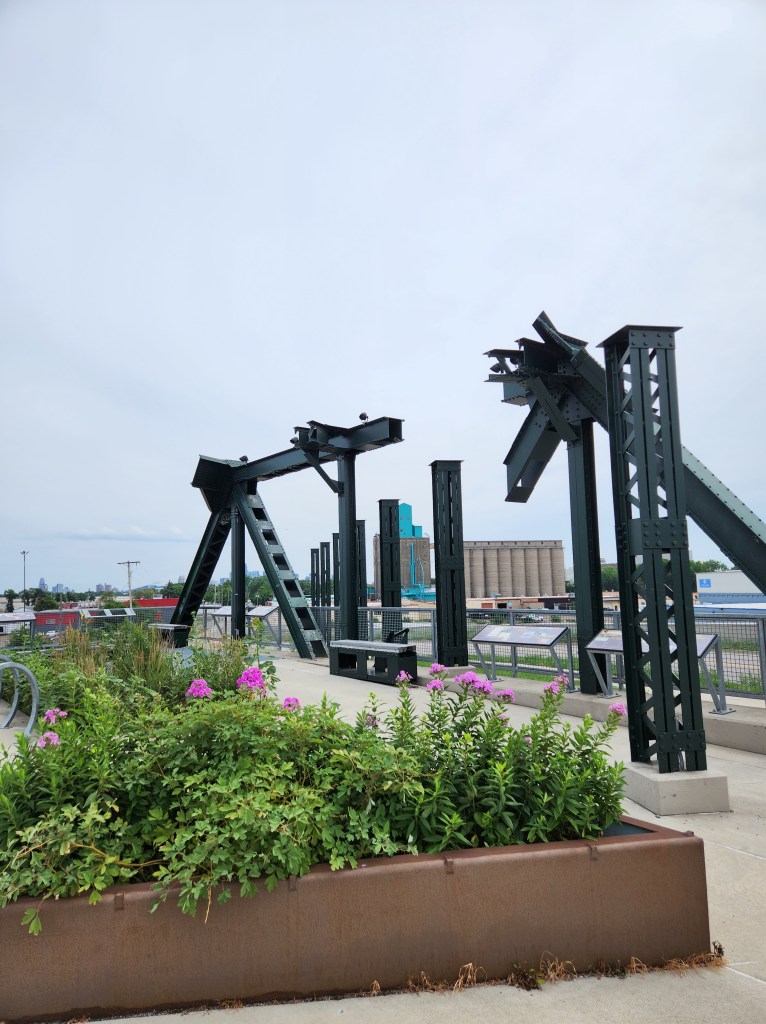

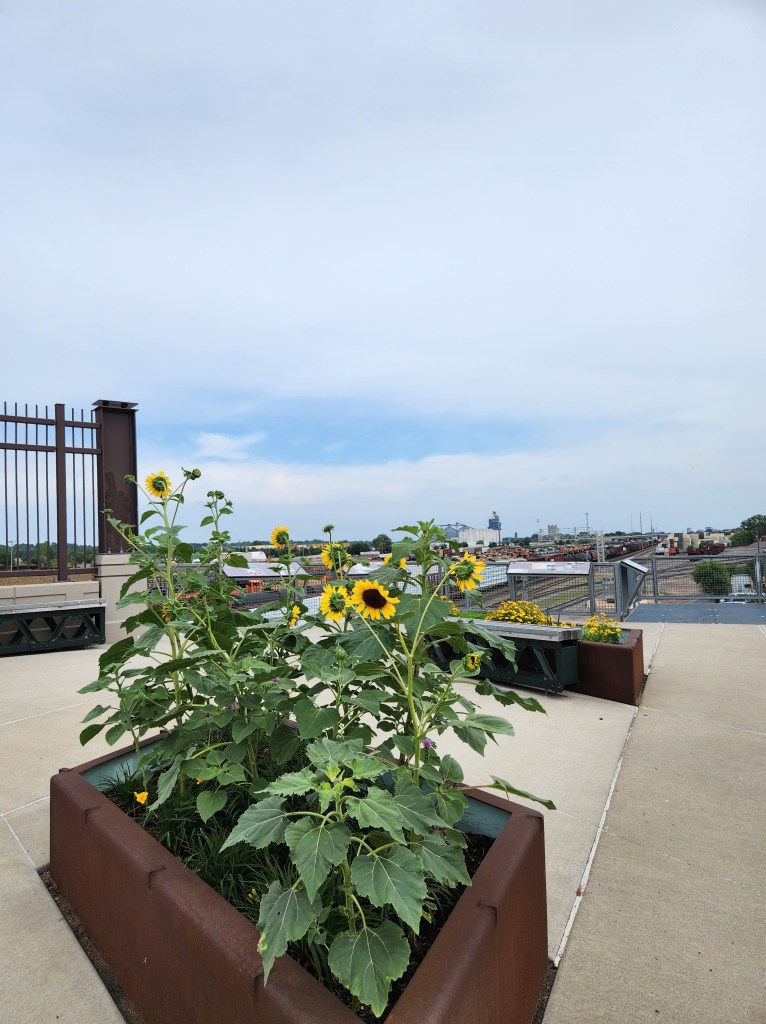
I didn’t take in much about the railroad (over the last 24 years I’ve been surprised by all the people I see on the bridge just because they find the trains and rail yard interesting–not throwing any shade here, it’s just not something I find obviously noteworthy) but I DID find the name of the lake!
When I got home I Googled “Sandy Lake” and was able to learn a bit about its history and the history of my little corner of the world. I won’t try and recount that (please check out http://millcitytimes.com/news/columbia-park-129-years-of-history.html and https://racketmn.com/the-lost-lakes-of-minneapolis ) but my main takeaway was that the lake was basically naturally dried up by 1914 when the city drained it (so the city wasn’t really the bad guy here as I assumed).
Also, now that I know that Sandy Lake used to exist, the recent “Stormwater management” project (https://www.mwmo.org/planning/northeast-stormwater-management-initiative/) at our end of the golf course makes a lot more sense.
One of the results of this stormwater management project is an abundance of wildflowers. Just like living close to a rail yard has made me more open to the coolness of trains, my frequent exposure to these wildflowers has changed my perspective about wildflowers. Okay, up until about two months ago, I basically thought of all the new wildflowers that were growing along new pedestrian path as weeds. Weeds that were intentionally allowed to flourish, weeds that may even have some pollination values, but still weeds.
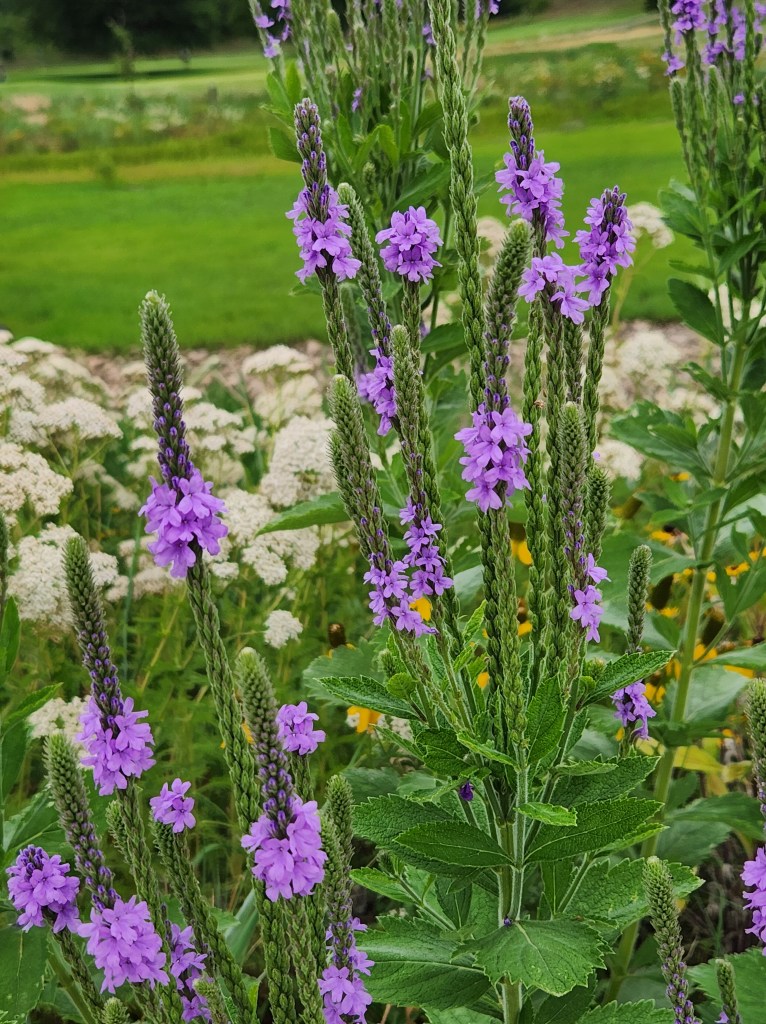


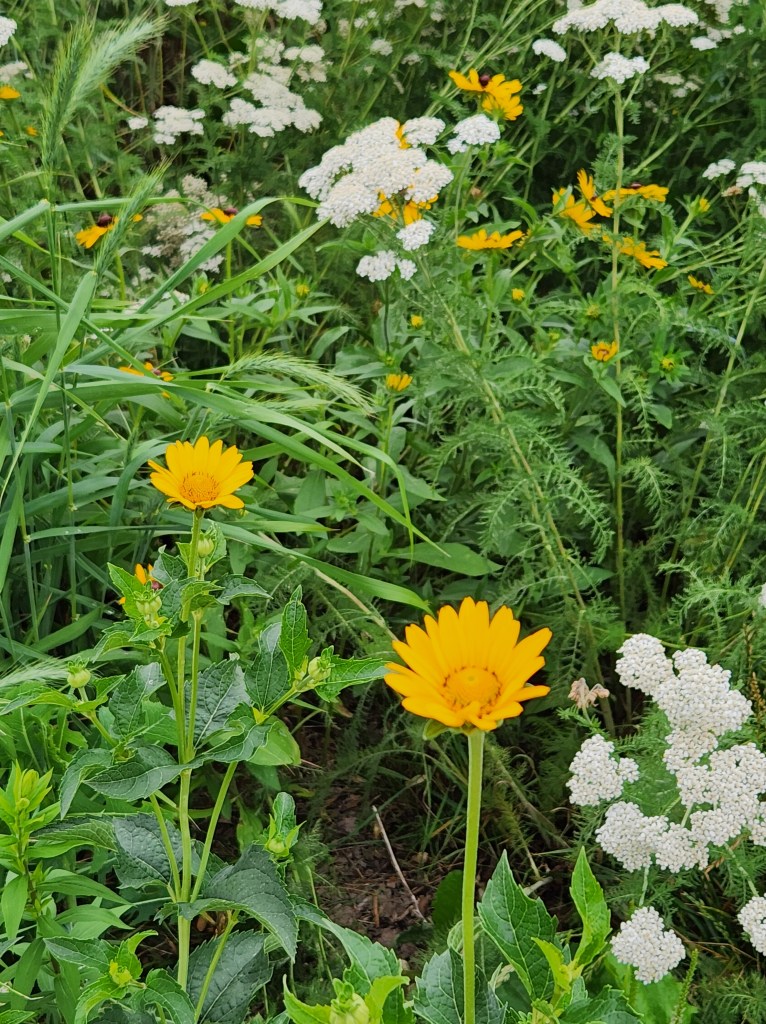
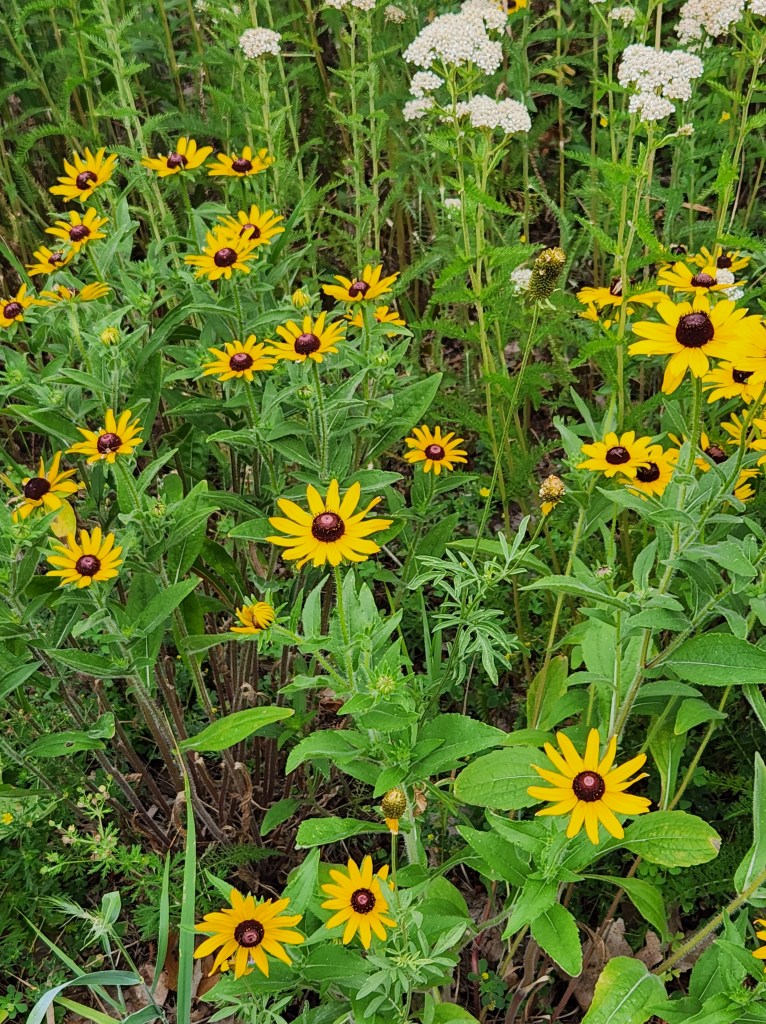
For some reason, a couple of weeks ago, I decided to take some time and walk on the pedestrian path (which I usually just run by) and look at my surroundings. Wow, the plants along the trail are really lush and varied. I’m not sure if they are technically weeds, or wildflowers, or maybe both. But I do know that taking the time to actually look at them made them a lot more interesting.
There’s much to learn about the history of where we live: There used to be a Sandy Lake. The Saint Anthony Parkway Bridge is a big deal. But perhaps the most important takeaway for me is that history can be interesting and provide a little more depth and nuance to my experience of living in our neighborhood and help me feel even more connected to where I live.
A little information and a shift in perspective can help me appreciate things–in this case local history, and trains, and wildflowers–in a new way.
 Amy Lu's View
Leave a comment